

Our Work
Transforming environmental threats into sustainable solutions.
Our Work
Transforming environmental threats into sustainable solutions.
From Infestation to Innovation
Over a three-year period, we investigated integrated value chains centred on the beneficiation of invasive Pine cleared from the Napier Mountain Conservancy.
By rigorously challenging industry conventions and utilising iterative trial-and-error, we interrogated every step of the process to identify evidence-based alternatives for biomass utilisation within the Cape Floristic Region.


The Hard-Won Truths
Unlike managed plantations, invasive alien plant infestations provide a highly heterogeneous feedstock, characterised by inconsistent species composition, size, and quality.
This variability presents several systemic challenges:

Operational Instability
Economic Shortfalls
No single commercial product yields sufficient revenue to fund the extensive, landscape-level clearing and ecological restoration required.
The unpredictable nature of the biomass prevents the standardised planning and stable management essential for conventional supply chains.
Complexity in Diversification
Low Resource Utilisation
Only a small percentage of harvested biomass meets the criteria for traditional products, leading to inefficient clearing rates and inadequate conservation outcomes.
Multi-product value chains are hindered by species-specific utility; for instance, while Pinus is viable for pallets and Eucalyptus for firewood, other species like Hakea offer negligible commercial value.
"Traditional multi-product value chains utilising variable invasive biomass cannot achieve the financial self-sufficiency required to fund large-scale removal and landscape rehabilitation."
THE VERDICT
Consequently, these models fail to deliver the necessary socio-economic and conservation impact to effectively address water security, biodiversity loss, and wildfire risks across the Cape Floristic Region.

The Strategic Pivot
To address these challenges, a production process is required that is agnostic to biomass variability and capable of processing high volumes of feedstock.
Biochar, when properly made, is a stable, carbon-rich solid created by heating biomass (such as invasive alien plants) in a low-oxygen process called pyrolysis. Unlike raw biomass which releases greenhouse gases when decomposing, biochar resists decomposition, locking carbon in the soil for hundreds to thousands of years, and providing numerous benefits for regenerative agriculture and water purification.
Engineered Biochar (EngBC) is produced in a closed, controlled environment that virtually eliminates the atmospheric emissions that are typically found in open-air production methods. The system allows precise adjustments to pyrolysis speed and temperature to accommodate changes in biomass type and quality. This prevents harmful toxins from being created in the biochar due to incomplete pyrolysis of the biomass - a common risk of open-air production - and guarantees consistently high quality and, consequently, longevity.
Engineered Biochar (EngBC)

Boldly Contributing to Climate Resilience
Engineered biochar enhances climate resilience by simultaneously sequestering atmospheric carbon and strengthening the adaptive capacity of ecosystems.


Climate Adaptation
Clearing invasive alien plant infestations mitigates systemic threats to water security, wildfire risk, and biodiversity. Removing these species restores natural hydrologic flow, reduces fuel loads to prevent catastrophic wildfires, and protects the unique ecological integrity of the Cape Floristic Region.
Climate Mitigation
Converting invasive woody biomass into engineered biochar through pyrolysis facilitates long-term carbon sequestration. By transforming captured atmospheric CO₂ into a stable, solid form that resists decomposition, biochar ensures permanent carbon storage for centuries when integrated into soil.
Carbon Coded for Impact


Agriculture
Engineered biochar features a highly porous, sponge-like structure that significantly enhances soil aeration and water retention, increasing crop resilience to drought while reducing irrigation requirements.
Its high cation exchange capacity (CEC) enables the efficient retention of essential nutrients, such as nitrogen and phosphorus, preventing groundwater leaching and optimizing nutrient availability for increased yields. Furthermore, this stable structure provides a protected habitat for beneficial soil microorganisms, fostering the natural nutrient cycling essential for sustained plant growth and reducing dependence on chemical fertilizers.


Water
Engineered biochar serves as a cost-effective solution for water quality management and resource conservation. Its expansive surface area and porous architecture act as a high-capacity filter, effectively adsorbing and immobilizing pollutants such as heavy metals, pesticides, and organic contaminants from surface and wastewater.
Additionally, by improving soil water retention, engineered biochar minimizes surface runoff and enhances groundwater recharge, strengthening the overall hydrological resilience of the watershed.
The New Equilibrium
This model could transform conservation and socio-economic impacts through several key strategic pillars:
Innovative Financing
It transitions invasive species management from a grant-dependent activity to a self-sustaining enterprise. This model serves as a template for cross-sectoral partnerships that prioritise planet- and people-centric outcomes over short-term profit maximisation.
Scalable Environmental Impact
Socio-Economic Development
The model generates tangible community benefits through sustainable job creation and multi-faceted skills development, supporting the growth of localised green economies.
Utilising all invasive alien biomass – regardless of quality – to produce engineered biochar and high-integrity Carbon Removal Certificates ensures consistent funding for landscape-scale rehabilitation. This facilitates enhanced water security, wildfire mitigation, and biodiversity protection across the Cape Floristic Region.
The New Equilibrium
This model could transform conservation and socio-economic impacts through three key strategic pillars:
Innovative Financing
It transitions invasive species management from a grant-dependent activity to a self-sustaining enterprise. This model serves as a template for cross-sectoral partnerships that prioritise planet- and people-centric outcomes over short-term profit maximisation.
Scalable Environmental Impact
Socio-Economic Development
The model generates tangible community benefits through sustainable job creation and multi-faceted skills development, supporting the growth of localised green economies.
Utilising all invasive alien biomass – regardless of quality – to produce engineered biochar and high-integrity Carbon Removal Certificates ensures consistent funding for landscape-scale rehabilitation. This facilitates enhanced water security, wildfire mitigation, and biodiversity protection across the Cape Floristic Region.


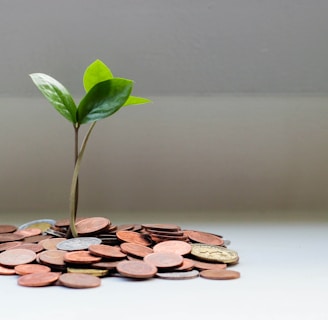


After years of hard work, we're getting closer to matching the solution to the size of the invasive alien plant problem.
Join our mailing list so you don't miss out:


Take part in restoring our environment.
We have a dedicated fund for landscape rehabilitation so YOU can be part of the solution.

Take part in restoring our environment.
We have a dedicated fund for landscape rehabilitation so YOU can be part of the solution.


Established in partnership with Earth Science Africa to produce engineered biochar (EngBC) from invasive alien plants in the Cape Floristic Region.
Impact in every particle.
Improving agricultural production, healthy soils, and water quality – while curbing catastrophic water loss and out-of-control wildfires.


Producing engineered biochar using invasive alien plants as feedstock is a joint venture with:


Legal
© 2026 Regenerative SPACE.
Non-Profit Company Registration 2020/674691/08 256-210 NPO
930073441 PBO

